
How Zero Proof Impacts Margin, Table Turnover, and Average Guest Check
-
 Tomasz Wojtalewicz

Table of contents
Zero proof as a business decision, not an ideological one
Discussions around zero proof in hospitality and foodservice often start with emotions, personal beliefs, or narratives about changing guest lifestyles, while in reality they should begin with numbers, cost structures, and operational impact. For the HoReCa industry, zero proof is not a statement “for or against” alcohol, but a response to measurable shifts in guest purchasing behavior and to changing demand patterns throughout the day. More and more guests are not giving up restaurants or bars — they are giving up alcohol. For businesses, this means a clear choice: either learn how to generate revenue from this shift or leave that revenue to competitors.
Today’s zero proof guest is neither accidental nor price-driven. It is a conscious consumer, often with higher purchasing power, who expects quality, experience, and a fully developed offer rather than a compromise in the form of water, tea, or juice. From a restaurant or hotel perspective, this is a guest who comes for value, stays longer, returns, and recommends the venue — provided that non-alcoholic options are treated with the same seriousness as alcoholic ones.
Why the conversation about 0% should start with numbers, not beliefs
Introducing a zero proof offer in restaurants or hotels is rarely a purely image-driven decision today, even if it may appear that way at first glance. In practice, it is a response to measurable changes in guest behavior and growing cost pressure on the operational side. Venues that analyze sales by hour and by day increasingly identify revenue gaps during periods when alcohol sells poorly or not at all. Zero proof begins to fill these gaps, generating revenue where none previously existed — without increasing guest counts or expanding floor space.
From this perspective, the discussion around non-alcoholic drinks should start with sales data, check structure, and cost analysis, rather than abstract views on alcohol itself.
Who today’s zero proof guest is — and why this is a “high-quality” customer
The profile of guests choosing zero proof has changed significantly in recent years. Increasingly, these are professionally active individuals, business travelers, or guests combining work with leisure, who prioritize recovery, focus, and next-day comfort. Non-alcoholic drinks are not seen as a limitation, but as a deliberate choice aligned with their lifestyle.
For venues, this translates into a guest who actively engages with the food and beverage offer, spends more time in shared spaces, and expects a level of quality comparable to alcoholic options. As a result, zero proof attracts a segment that delivers stable revenue and is less susceptible to impulsive demand fluctuations.
Margin — why 0% drinks often earn more than expected
Margin discussions around non-alcoholic drinks are often reduced to ingredient price comparisons, leading to misleading conclusions about profitability. In reality, margin in hospitality is the result of the entire cost structure, operational processes, and pricing strategy — not merely the presence of alcohol in a recipe.
Seen through this lens, zero proof increasingly proves to be a category that helps stabilize financial performance, reduce cost volatility, and improve sales predictability, particularly in an environment of rising raw material and labor costs.
Cost of ingredients vs. selling price — where margin is really created
When assessing the profitability of zero proof drinks, the key distinction lies between ingredient cost and the value guests assign to the finished product. The selling price is not determined solely by alcohol content, but by the overall experience, including flavor, presentation, and service.
When designed as a fully integrated part of the menu, 0% drinks can reach price points close to classic cocktails, while maintaining lower and more predictable production costs. This often results in a highly attractive price-to-cost ratio, especially compared to cocktails based on expensive premium spirits.
Zero proof without excise tax, losses, or high-proof alcohol costs
Another factor positively influencing margins is the simplified cost structure typical of zero proof offerings. The absence of excise taxes, combined with lower risks related to storage, portioning, and slow turnover of high-proof alcohol, makes financial outcomes easier to forecast.
For many venues, this means less cost volatility and better control over the profitability of individual menu items. Zero proof also eliminates certain indirect costs, such as licensing or permit fees, which are often overlooked in day-to-day alcohol cost analysis.
Standardized 0% recipes as a tool for food & beverage cost control
Zero proof naturally supports standardization, one of the most effective tools for controlling food and beverage costs. Repeatable recipes, clearly defined ratios, and a limited number of ingredients make it easier to maintain consistent quality while simplifying operations.
Standardization streamlines team workflows, shortens training time, and reduces the risk of errors, which over time translates into lower operational costs and more stable margins.
Average guest check — how zero proof increases basket value
The average guest check rarely grows solely through individual high-priced menu items; more often, it increases through changes in how guests engage with the offer throughout their visit. Zero proof influences this dynamic by improving decision comfort and pace, extending dwell time, and encouraging more natural add-ons to the check. As a result, 0% drinks function not only as a standalone sales category, but as a tool for increasing overall basket value.
Why zero proof guests are more likely to order more than one drink
Check analysis shows that guests choosing zero proof are more likely to order additional drinks during a single visit. The absence of alcohol removes concerns about well-being or post-visit performance, allowing for more relaxed purchasing decisions. In practice, this leads to more line items on the check, particularly during longer meetings, laptop work sessions, or daytime visits. Zero proof thus supports higher basket value without aggressive upselling.
The “no-pressure” effect — zero proof and guest purchasing decisions
A key driver of incremental sales is the so-called “no-pressure” effect that accompanies 0% offerings. Guests feel greater control over their choices, which encourages menu exploration and openness to staff recommendations. Purchasing decisions become less binary and more process-oriented, increasing the likelihood of additional orders during a single visit. From a business perspective, this translates into better monetization of guest dwell time.
Cross-selling: zero proof + food, desserts, experience
Zero proof drinks integrate exceptionally well with the culinary offer, supporting food and dessert sales rather than limiting them. The absence of alcohol makes it easier to pair drinks with multiple courses and encourages fuller engagement with the menu. As a result, zero proof does not function as a separate category, but as part of a cohesive hospitality experience that increases both average check value and overall guest satisfaction.
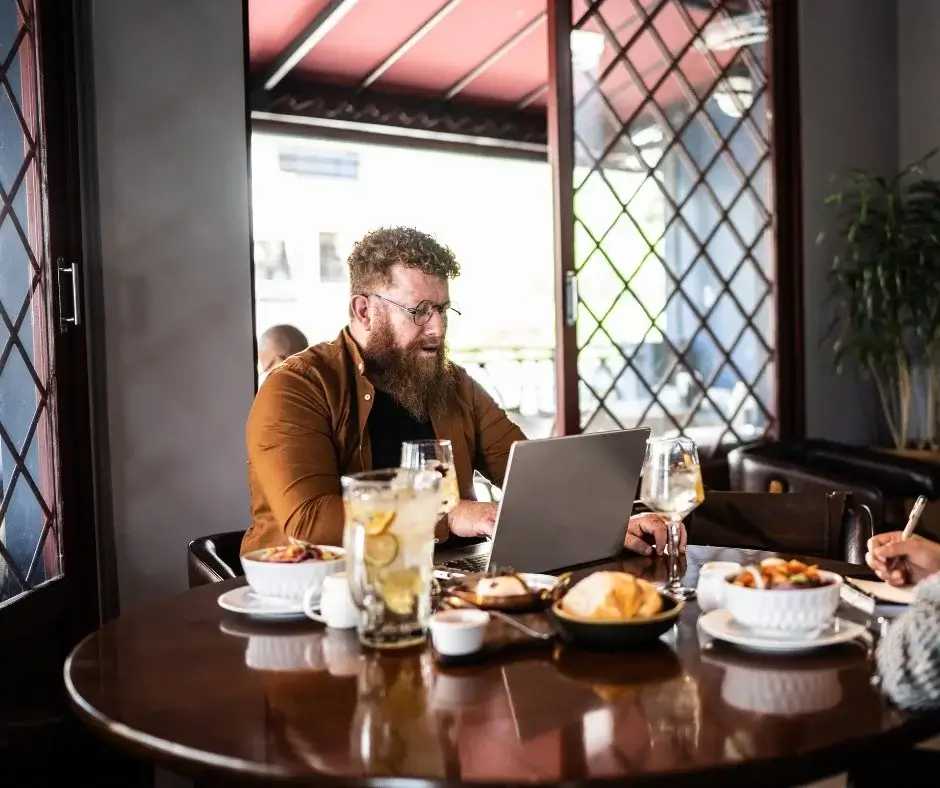
Table turnover – less alcohol, more operational flow
Table turnover is one of the metrics that directly impacts a venue’s revenue, yet it is often missing from everyday discussions about beverage strategy. Zero proof influences both service pace and length of stay in a less visible, but highly consistent way, improving operational flow without increasing sales pressure or changing the reservation model.
Zero proof and shorter decision-making and service times
From an operational perspective, zero proof affects table turnover as early as the ordering stage. Decisions around non-alcoholic drinks are usually made faster, as they require fewer follow-up questions, calculations, or alcohol-related considerations. The preparation of 0% drinks is also more predictable, reducing the time between order placement and service. Over the course of a shift, this results in smoother guest flow and more efficient use of available space, especially during peak hours.
Less “alcohol inertia” and faster table release
Alcohol often extends a guest’s stay in ways that do not necessarily translate into a proportional increase in the check. Zero proof changes this dynamic by reducing so-called alcohol inertia — moments when guests remain at the table without further active consumption. Visits become more time-predictable, which simplifies capacity planning and increases the number of possible seatings throughout the day. For venues operating with limited floor space, this is one of the less obvious but financially meaningful effects.
Zero proof during the day: business breakfasts, lunch, lobby bar
Zero proof plays a particularly important role during daytime hours, when alcohol is naturally not the guest’s first choice. Business breakfasts, lunches, meetings in lobby bars, or remote work in hotel spaces are situations where 0% drinks generate revenue without disrupting the purpose of the visit. As a result, areas that previously served mostly a brand or ambiance function begin to contribute measurably to financial performance.
Zero proof as a way to drive sales beyond traditional alcohol hours
Many venues still base their revenue model on a narrow window of hours when alcohol sales peak. Zero proof expands this perspective by unlocking sales opportunities during parts of the day that were previously under-monetized. Beverage offerings begin to function within a broader operational context, rather than only as part of evening service.
How 0% extends a venue’s “operational profitability window”
In many restaurants and hotels, there are clear time blocks when alcohol sales are low or marginal. Zero proof shifts the profitability threshold into these hours by offering products aligned with guest needs. This reduces dependence on the evening sales peak and distributes revenue more evenly throughout the day. From an operational management standpoint, this leads to better utilization of both staff and infrastructure.
The guest who wouldn’t order alcohol — but will order zero proof
There is a large group of guests who avoid alcohol in certain situations but are open to alternatives, provided they are attractive and consistent with the venue’s positioning. Zero proof addresses this need, enabling sales where the check would previously have ended with water or coffee. As a result, venues reclaim revenue that was previously out of reach, without changing their concept or communication strategy.
The impact of zero proof on teams and operations
Decisions around beverage offerings affect not only guests, but also team workflows and daily operations. Zero proof introduces changes that are visible in work rhythm, guest interaction, and service load — often improving efficiency without the need for additional procedures or extensive training.
Simpler service and lower risk of errors
Zero proof simplifies many aspects of daily operations. Less complex processes, repeatable recipes, and the absence of high-proof alcohol reduce the risk of mistakes and losses. For managers, this means greater control over quality and costs; for teams, more confidence in execution, particularly during high-volume periods.
Greater service comfort and easier recommendations without mental barriers
Recommending 0% drinks is psychologically easier for staff than selling alcohol. The fear of guest judgment disappears, and conversations focus on flavor and experience rather than quantity or strength. This encourages more natural selling and stronger guest relationships, which over time translates into better team performance.
Zero proof as part of a modern workplace culture
Zero proof also influences internal workplace culture by supporting a more balanced and professional environment. Teams working in venues that offer strong 0% alternatives often perceive them as more modern and more attuned to the needs of both guests and employees. This is increasingly relevant for recruitment and staff retention.
Why the lack of a zero proof offer costs businesses real money
The absence of zero proof is rarely seen as a cost, because it does not appear directly in financial statements. In practice, however, it represents missed sales opportunities and underutilized guest potential. Over time, this “invisible cost” becomes increasingly relevant to overall performance.
The lost check of the guest who “doesn’t drink”
Without a well-designed zero proof offer, real revenue is lost — even if it is not immediately visible in reports. Guests who do not find a suitable option either limit their order or shorten their visit, reducing the venue’s ability to increase the check. Over a month or year, these amounts have a tangible impact on profitability.
A brand image that no longer matches market expectations
Beverage offerings are now a core part of a venue’s brand perception. Restaurants and hotels that fail to include zero proof options are increasingly seen as out of step with modern guest expectations. This is not merely a trend issue, but a market signal that can influence venue choice, particularly in premium and business segments.
Conclusion: zero proof as an optimization tool, not a compromise
Zero proof should not be viewed as an alternative to alcohol, but as part of a broader optimization of the hospitality offering. When thoughtfully designed and embedded in operational realities, it supports revenue stability, team efficiency, and a cohesive guest experience — rather than serving as a reaction to short-term market shifts.
When zero proof starts delivering financial results
Zero proof begins to meaningfully impact financial performance when it is treated as an integral part of the offer, not an add-on. A coherent menu, appropriate pricing, and consistent communication allow 0% drinks to support margin, table turnover, and average check simultaneously, strengthening business resilience.
Why this is not a trend, but a new HoReCa standard
Changes in guest behavior, daily routines, and expectations toward hospitality mean that zero proof is moving beyond trend status and becoming a new standard. For venues with a long-term perspective, this is less a choice than a natural step toward a more resilient and sustainable business model.