Does Alcohol-Free Vodka Make Sense? 7 Reasons That Make More Sense Than You Think
-
 Tomasz Wojtalewicz

Table of contents
What’s the deal with these vodka-style non-alcoholic drinks?
Let’s be honest: the drinks industry is changing faster than ever before. A few years ago, “vodka-style non-alcoholic drinks” sounded like a joke — right up there with low-calorie pizza or caffeine-free coffee. And yet today, zero-proof products are everywhere: on store shelves, in bars, and in home cocktail setups. They don’t pretend to be flavored water — they position themselves as a genuine alternative to vodka.
For anyone encountering them for the first time, it can be confusing:
How can something taste like alcohol when it contains none?
And, more importantly: why does this category even exist?
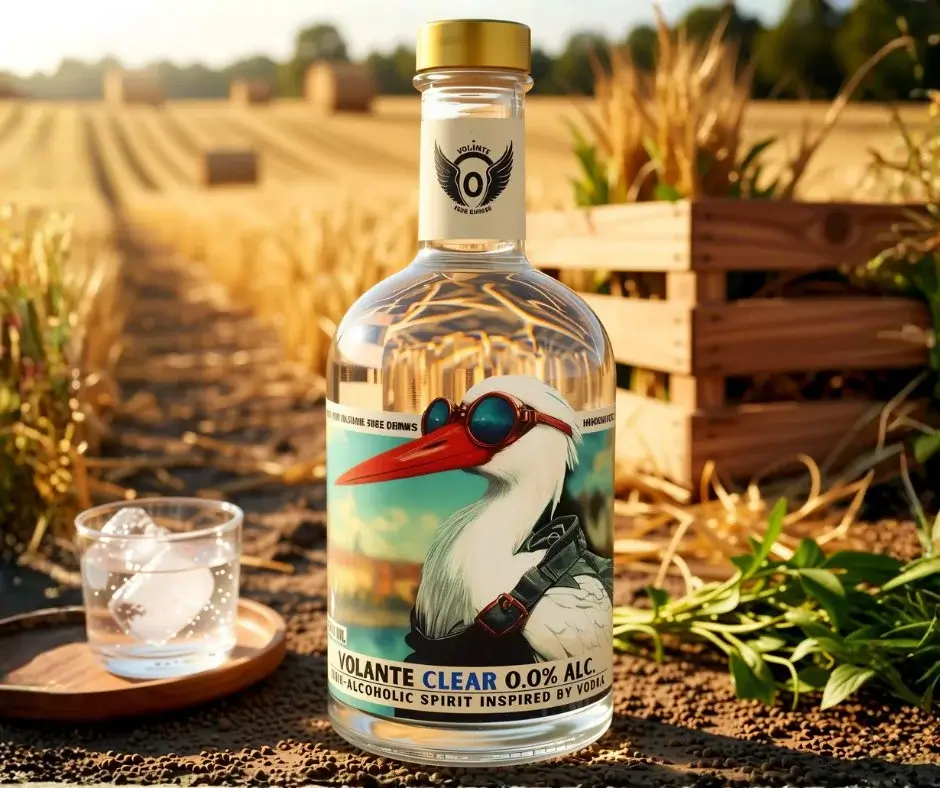
So if someone occasionally asks, “Is there such a thing as a spicy 0% vodka?” — the answer is yes. Not because the industry wanted to create “vodka for kids”, but because these products meet a very real need: preserving the flavour experience without the effects of ethanol. To understand why this makes sense, let’s first look at what these drinks actually are.
How does it differ from classic vodka?
The simplest explanation is this: what changes after you drink it. Classic vodka works because it contains ethanol — it warms you, gives that familiar “kick”, alters your perception.
A zero-proof drink doesn’t do any of that. Instead, it operates on a flavour and sensory level.
The best vodka-style 0% products deliver:
a clean, neutral flavour profile
smooth texture
a dry finish
subtle heat or spice
a mineral character
Together, these elements create an experience far beyond lightly flavoured water. They allow a cocktail to taste like a real cocktail — with depth, structure and a finish you can feel on the palate — rather than like lemonade.
How is it made?
Unlike traditional vodka, zero-proof vodka isn’t about fermentation or alcohol content. It’s about building a sensory experience. Producers work a bit like perfumers and a bit like chefs — blending aromas, essences and techniques that create a perception of “strength”, smoothness and character in the mouth.
It isn’t flavoured water. It’s a composed mixture: layers that interact to deliver what you expect from a strong spirit — clarity, bite, and full flavour.
Some people say these drinks have a “touch of alchemy” because they can genuinely fool the senses. Despite containing no alcohol, they can warm the palate, sharpen a cocktail’s flavour and leave a noticeable finish. That’s also why the question “Is there a spicy 0% vodka?” keeps popping up — the effect really can be surprising.
Reason 1 – Consumers are starting to separate flavour from alcohol
For a long time, flavour and alcohol were treated as a package deal: if you wanted a rich, expressive cocktail, it had to contain booze. That mindset is now shifting. More and more people are discovering that you can enjoy a well-crafted drink without taking in ethanol.
A decade ago, the alternatives were limited to cola, orange juice or water with lemon. That worked… until it didn’t. Adults want something that looks and tastes like a cocktail — without the next-day consequences that ruin the experience.
The culture of cocktails — without the hangover
Many people have realised they want to enjoy the social aspect of an evening out without waking up tired, unfocused or sluggish. Zero-proof cocktails solve that problem. They deliver the same atmosphere, the same experience and the same “moment” — just without the downside.
The placebo effect and ritual without alcohol
A huge part of the “alcohol effect” comes from context: the glass, the pour, the toast, the sound of ice, the presentation. Consumer behaviour research shows that these ritual elements strongly influence how we perceive a drink.
And here’s the interesting part: this response happens even when the glass contains a 0% drink.
That’s why many people who choose zero-proof cocktails say, “It feels the same.” The ritual — raising a glass, taking part in the conversation, holding a proper drink — stays intact. Alcohol isn’t necessary for the moment to work; the placebo effect takes care of the rest.
This is why zero-proof has become a true alternative rather than a novelty: it lets you participate fully, without any of the alcohol-related consequences.
Reason 2 – More people are limiting alcohol (by choice, not by force)
Between “I drink” and “I don’t drink” lies a huge middle ground: people who don’t have a problem with alcohol, aren’t abstinent, but simply don’t want to drink all the time. Maybe once every two weeks? Sure. But during the week, on a date, before work, or before training — not so much.
The mindful drinking trend
Mindful drinking isn’t a fad — it’s a long-term shift in how people approach alcohol. More consumers are consciously deciding when and why they want to drink — and equally consciously deciding when they don’t. Alcohol is no longer the automatic default at social gatherings.
This trend is rooted in one idea: we want to feel good now and tomorrow morning. Sleep, energy, mental clarity, productivity and fitness matter more.
In that context, a non-alcoholic cocktail isn’t a compromise — it’s a smart choice that preserves the experience without the costs of alcohol.
As a result, a group of consumers has emerged who aren’t giving up alcohol entirely, but want a high-quality alternative to sit alongside it. That’s where zero-proof products fit perfectly.
Zero-proof as the new event standard
Not long ago, non-drinkers at events were offered water, cola or juice — signalling they were “outside” the main social experience.
Now, many venues, restaurants and event organisers include full zero-proof cocktail menus. Alcohol-free bars are becoming a standard feature — not an add-on.
This shift affects the entire drinking culture. People who drink less (or not at all) feel included, and everyone else gains a genuine choice. You can toast, enjoy a crafted drink and stay fully sharp.
Zero-proof is no longer “for drivers” or “for pregnant women”. It’s becoming as normal as alcoholic spirits — just without the side effects. The social norms are changing accordingly.
Reason 3 – You can recreate flavour and heat without alcohol
One of the most interesting discoveries in modern mixology is that intensity and character don’t rely solely on ethanol. Alcohol mainly acts as a carrier — lifting aromas, adding structure, enhancing sharpness and giving a defined finish.
Once experts broke that sensation down, it became clear that the same effect can be created through other means. You don’t need alcohol to make a drink expressive, warming or “strong”.
Heat and character — without the alcohol
Zero-proof spirits use elements that naturally stimulate the senses, creating heat, dryness and intensity. The goal isn’t to copy alcohol exactly, but to recreate the experience of drinking something bold, not bland.
That’s why many people are surprised the first time they try a vodka-style 0% spirit. It’s clean, but assertive. There’s a gentle heat that lingers on the tongue — exactly what you expect from a strong drink. This also explains why the question “Is there a spicy 0% vodka?” keeps coming up — because the category can genuinely deliver that sensation.
Why a drink without “kick” falls flat
A cocktail needs balance: some sweetness, some acidity — and something with structure. Without a contrast point, many alcohol-free drinks taste thin or too sweet.
Vodka-style zero-proof drinks fix that. They add:
a touch of heat to balance sweetness
structure so the drink isn’t watery
intensity that stays on the palate
dryness that gives an adult flavour profile
This is why cocktails made with 0% vodka taste like real cocktails. Not as a compromise — but as a proper alternative that preserves what matters most: character.
Reason 4 – A real alternative for drivers, athletes and people on medication
Not everyone can drink alcohol in every situation — sometimes for health reasons, sometimes for practical ones, and sometimes simply because you need to be fully sharp the next day. For years, people in this position had very limited choices: water, cola, juice. Nothing that even resembled a proper drink. Zero-proof beverages have changed that dynamic completely.
It’s not about “I can’t”, but about “I can choose”
The most important thing this category offers is choice. Someone who’s driving or taking antibiotics doesn’t have to miss out on the feeling of being part of the moment. They can order a 0% cocktail, stay fully in control and still enjoy the same flavour and social experience as everyone else. The message shifts from “I can’t drink” to “I’m choosing something different” — and psychologically, that makes a huge difference.
A life without party FOMO
For years, alcohol was the centre of social events. If someone didn’t drink, they often felt excluded — not because they didn’t want to have fun, but because they weren’t offered anything appealing. Zero-proof cocktails eliminate that problem. They allow you to join the flow of the event completely: you clink glasses during a toast, you hold the same style of drinkware, you participate in all the usual rituals. The difference is subtle but very real — you stay free, clear, and wake up the next day without regret or FOMO.
Reason 5 – The evolution of gastronomy and modern mixology
The food and beverage world has undergone a major transformation in recent years. Bartenders are shifting their creativity toward flavour, craftsmanship and presentation — not just alcohol strength. In this new mindset, zero-proof drinks aren’t substitutes; they’re fully functional tools for building flavour.
Bartenders want to create full-fledged 0% cocktails
Professional bartenders no longer want to serve lemonade to people who don’t drink. They want to craft 0% cocktails that are just as complex, aromatic and visually appealing as their alcoholic counterparts. Vodka-style zero-proof products give them exactly what they need: a neutral, crystal-clear base with character, suitable for dry, sour, spicy or fruit-forward compositions. This opens up a huge playground for experimentation.
0% vodka as a creative tool
For mixologists, zero-proof isn’t a limitation — it’s an extra colour on the palette. They can build layered cocktails, play with structure and elevate flavours without worrying about drinks becoming too strong or unsuitable for part of their guests.
That’s why more bars are introducing dedicated alcohol-free cocktail menus. It’s not a short-lived trend — it’s a deliberate expansion of a category that attracts new guests and broadens the creative possibilities of a bar.
Reason 6 – A generational shift and new drinking habits
The zero-proof movement didn’t appear out of nowhere — it’s driven by lifestyle changes and new expectations, especially among younger generations who want experiences, but not necessarily alcohol.
Gen Z drinks less — but wants more experiences
Consumer research around the world is clear: Gen Z drinks significantly less alcohol than millennials or boomers. Not because they’re “anti-alcohol”, but because they prioritise health, wellbeing, productivity, training and sleep differently.
Yet they still want to participate in modern food and drink culture — they enjoy beautiful cocktails, bold flavours and aesthetic moments. That’s exactly where 0% vodka and other zero-proof options fit perfectly.
Social drinking without alcohol
For younger generations, “social drinking” doesn’t have to mean drinking alcohol. It’s about being together, sharing a moment, doing something collectively.
Zero-proof options preserve all the social elements — without the alcohol load.
The result? More and more gatherings, parties and events are mixed: some people drink alcohol, others choose zero-proof — and no one finds it strange anymore.
Reason 7 – Because it simply… works and has a market
Finally, the most straightforward point: 0% vodka isn’t an experiment. It’s a growing category with real demand, loyal consumers and strong momentum. If it didn’t make sense, the market would have killed it off already.
Why do people genuinely like it?
Because it gives them something they’ve never really had before: the ability to drink an “adult beverage” with zero restrictions or consequences.
Some buy zero-proof because they want something more interesting than water. Others want to stay in shape. Others simply enjoy the taste and the variety of alcohol-free cocktails.
It’s a surprisingly broad consumer group — which proves that vodka-inspired 0% drinks aren’t for one niche, but many different types of people.
0% vodka is already established in Western markets
In the UK, the US, Scandinavia and Australia, zero-proof spirits are already mainstream — available in bars, supermarkets, restaurants and homes. The category is growing faster than many traditional spirits.
This is a global shift, not a quirky local trend. Central Europe is catching up — but the direction is clear: 0% vodka is becoming normal, expected and widely accepted.
Does alcohol-free vodka make sense for you?
Zero-proof products aren’t made for everyone — and they don’t have to be. They’re most useful when they address a specific need: keeping the flavour and social experience without the alcohol.
If you like drinking consciously, want control, or simply enjoy cocktails without the after-effects, this category is probably a great match.
When 0% vodka is genuinely a good choice
It’s especially useful when:
you want to enjoy a cocktail but stay clear-headed
you have work, training or responsibilities the next day
you’re driving or taking medication
you want to take part in rituals without alcohol
you enjoy the taste and structure of cocktails, but not the effects of ethanol
you’re reducing alcohol without giving up quality
In those moments, zero-proof isn’t a compromise — it’s the best possible solution.
How to test and assess 0% vodka
To evaluate a 0% vodka properly, you need to approach it differently than classic vodka. Don’t focus on what’s missing — focus on what it delivers. Pay attention to:
structure — does it feel watery or stable?
intensity — does it offer a touch of heat or character?
neutrality — does it stay in the background of the cocktail?
compatibility — how does it behave in sour, dry or fruity drinks?
balance — does it give the drink an adult flavour profile?
The best way to test it is both neat (just a small sip) and in a cocktail. Many zero-proof products reveal their true potential only when mixed.