Why Non-Alcoholic Drinks and Zero-Proof Options Are Essential on Modern Menus
-
 Tomasz Wojtalewicz

Table of contents
The market has changed: why guests now expect 0% options
In recent years, the hospitality market has gone through a transformation that’s hard to compare with any previous trend. A 0% offer is no longer seen as a polite add-on, but as a fully fledged part of the menu that guests – especially younger generations – actively look for. The logic of going out is changing: more and more often it’s not about alcohol itself, but about the quality of the experience, the company, taste, atmosphere and the ability to return to everyday life without side effects.
For many restaurants this moment is similar to the time when vegetarian and vegan dishes first appeared on menus – initially as an exception, today as a standard. The same is happening with non-alcoholic drinks: guests want real choice, and the lack of a professional 0% section is perceived not as “no alcohol”, but as a lack of care for the guest. Venues that understand this shift can clearly see that Zero Proof is not a fad, but a new definition of hospitality.
Data: the growing popularity of 0% drinks in hospitality
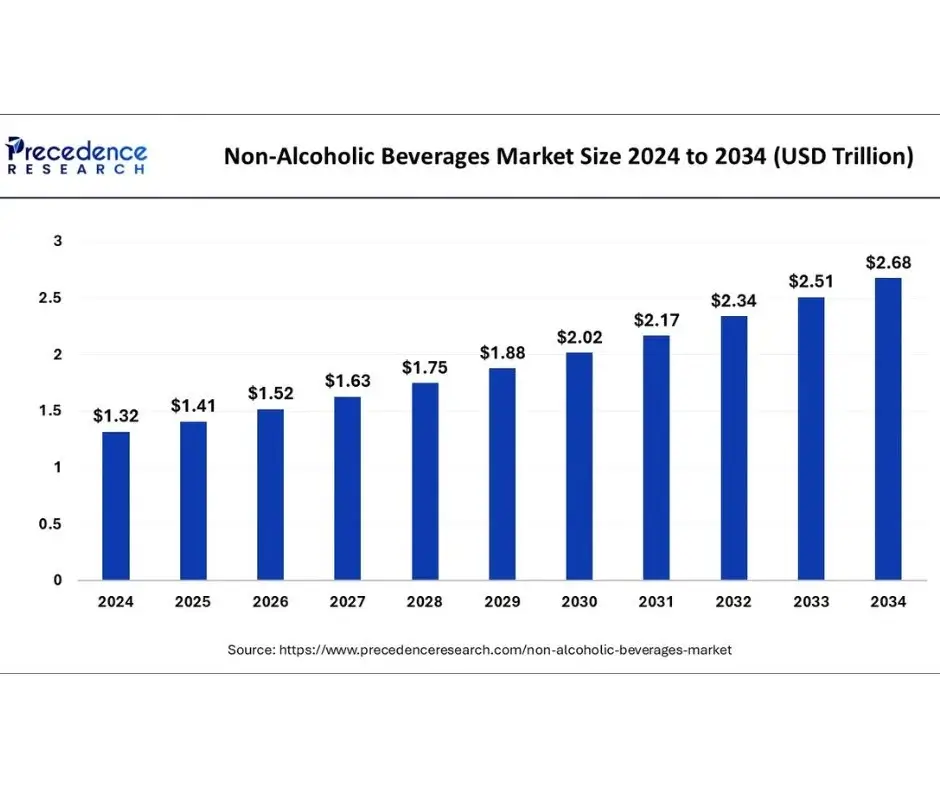
The non-alcoholic drinks market – from 0% beers and wines to increasingly advanced non-alcoholic “spirits” and mocktails – is growing dynamically, creating real opportunities for hospitality. According to recent reports, the global market for non-alcoholic spirits was valued at around USD 586.93 million in 2024 and is forecast to reach almost USD 858.9 million by 2033, with an average annual growth rate (CAGR) of around 4.4%.
At the same time, consumers are moving away from traditional alcohol consumption: a 2025 study showed that in the US almost 49% of adults say they are trying to cut down on drinking. Similar changes are visible in Europe – according to a report quoted in “Trend NoLo”, as many as 71% of Europeans say they are reducing their alcohol intake, and the non-alcoholic drinks sector is seeing noticeable growth.
In Poland, alcohol-free beer alone has become a powerful segment: sales of “zero” beers have risen by as much as 250% in recent years, and the share of non-alcoholic beers in the total beer market has exceeded 6.5%. What’s more, in a public opinion survey 55% of Poles declared that they actively limit their alcohol consumption, and as many as 64% considered alcohol-free beer a good alternative to traditional alcoholic beverages.
All of this shows clearly that the non-alcoholic segment is no longer a niche extra – it represents a real share of purchases and real demand. For restaurants and bars this means that the trend is shifting from curiosity to necessity.
Who are the guests choosing mocktails and non-alcoholic drinks in restaurants?
The change in consumption is not just about numbers – it’s also about new attitudes and expectations. The term sober curious – the growing interest in living with little or no alcohol – has become a symbol of this shift.
More and more consumers, for various reasons – health, wellbeing, responsibility – are deciding to reduce their alcohol intake or give it up completely. In many cases they choose non-alcoholic drinks and more flavour-forward alternatives that let them enjoy the going-out atmosphere without compromising on taste, presentation or ritual.
At the same time, it’s not only people who are completely abstinent. A growing group consists of those who drink less often, more moderately and more consciously. Their choices are driving the popularity of mocktails, ready-to-serve 0% spirits, functional drinks and all the options that deliver a bar experience without the alcohol. For venues, this means a new type of guest – often with high expectations and a willingness to spend.
For restaurants that think long-term, the message is clear: having 0% options on the menu is no longer just a way of meeting a guest’s needs – it’s an investment in a segment that will continue to grow.
What do you gain by offering 0% drinks on your menu?
For restaurants, a well-designed 0% offer brings several parallel benefits – for image, sales and operations. First, a professional mocktail list raises the perceived quality of the venue, because it shows that kitchen and bar operate at the same high level of craft. Guests are increasingly paying attention not only to the food, but to the overall experience – from aperitifs to the drinks that accompany the meal.
Second, a 0% offer helps increase the actual number of orders. Instead of choosing water or a cola, guests opt for a drink that feels like an attractive alternative. What’s more, these drinks are ordered more often at lunchtime, during business meetings and in situations where alcohol isn’t an option. Venues that have noticed this point out that by expanding their Zero Proof section they’ve increased not only beverage sales, but also the number of returning guests.
First impressions and perceived quality
Adding professionally crafted alcohol-free cocktails – mocktails, 0% versions of classics, zero-proof “spirits” – changes how a venue is perceived from the very first glance. A restaurant or bar with a carefully curated 0% section on the menu sends a clear message: we are modern, we value diversity, and we care about guests with different needs.
That first impression can determine whether a guest feels truly welcome – even if they don’t drink alcohol. That’s why the presence of 0% drinks is often seen as a signal of quality, openness and awareness – traits that are increasingly appreciated by today’s customers.
How a 0% offer widens your potential guest base
By offering 0% options, a restaurant or bar opens up to a much broader audience: people who avoid alcohol for health or dietary reasons, because they’re driving, or simply because it doesn’t fit the occasion. With the continued rise of the NoLo trend, the number of such guests is steadily increasing.
In addition, non-alcoholic drinks and mocktails appeal to those who do drink alcohol occasionally, but care about health, wellbeing or just want to drink more consciously. As a result, the menu becomes more inclusive and more adaptable to different situations.
In this way, the venue not only increases its attractiveness, but also its sales potential: more types of guests, more occasions to order – even if some of them choose 0%.
Why mocktails create a competitive advantage for restaurants
In today’s hospitality landscape, many venues offer a similar level of food and service. The difference – the part guests remember – often lies in the details. A well-developed 0% drinks section is a clear signal that a restaurant is keeping up with the times.
Mocktails and “0% drinks” allow you to offer a bar experience to guests who were traditionally excluded from the cocktail list. That’s a new layer of value, increasing loyalty and satisfaction – and becoming a genuine point of differentiation for the venue.
At the same time, a restaurant that takes the no/low-alcohol segment seriously builds a brand that feels friendly, modern and sensitive to diverse needs. In a world where consumers are making more conscious choices, that’s a very real competitive edge.
0% Drinks as a Pillar of Modern Hospitality
Today’s hospitality is built on quality, inclusivity and responsibility. Restaurants that aim to build long-term relationships with their guests must offer solutions that fit different lifestyles — from those practicing mindful drinking to those who simply want to feel good the next morning. Offering non-alcoholic drinks is therefore an act of care, one that has a direct impact on guest satisfaction.
Zero-proof drinks allow every guest to enjoy a full restaurant experience — whether they order a classic glass of wine or a citrus-driven mocktail. This makes the entire table feel equally catered for, and the bar becomes a place that naturally fosters comfort and openness. The more diverse the 0% menu, the greater the chance that every guest finds something suited to their tastes and feels genuinely understood by the venue.
Guest expectations in the era of mindful drinking
Modern gastronomy is evolving toward greater empathy, flexibility and understanding of guests’ needs. Increasingly, conscious consumption habits shape expectations toward restaurants and bars. Guests no longer want to feel that a non-alcoholic option is a compromise or a “lesser” choice. They want a complete experience — visually, sensorially and in terms of quality — equal to that of alcoholic drinks.
The mindful drinking movement has shifted priorities: consumers want to drink less, but better. It’s not just about health; a drink is meant to be an experience, not an afterthought. In practice, this means that 0% drinks must be flavourful, balanced, well-crafted and visually appealing. That’s why non-alcoholic cocktails and 0% spirits are now judged just as strictly as classic bar offerings.
Crucially, conscious guests are willing to pay nearly the same price for a 0% drink as for a traditional cocktail — as long as it’s well-designed and worth it. This creates a major opportunity for venues that want to offer a premium experience.
The role of variety — from classic profiles to premium creations
Modern hospitality also means offering a variety that responds to different occasions and moods. Guests expect more than a single “alcohol-free substitute”; they want a fully developed Zero Proof section, featuring:
classics in 0% versions (e.g., non-alcoholic mojito, Aperol-style spritz, 0% whisky sour)
signature mocktails created exclusively for the venue
drinks based on non-alcoholic spirits — products that are increasingly advanced and sophisticated
simple, elegant options for guests who prefer minimalism
Variety doesn’t only create a sense of professionalism — it also shows that the venue understands its guests. In premium restaurants, a well-built Zero Proof section has become a key part of the overall guest experience. It signals trend awareness, attention to detail and openness to new consumer behaviours.
In practice, modern hospitality means that non-alcoholic drinks form an integral part of the venue’s philosophy — not an afterthought. They allow you to offer a complete experience to every guest, regardless of their preferences or reasons for choosing 0%.
A strategic decision that pays off
Introducing a professional 0% section is not a spontaneous gesture — it’s a strategic decision that impacts sales, check structure, guest loyalty and brand perception. Venues that adopted Zero Proof early now see that they recognised a trend at the perfect moment. These places attract guests who appreciate attention to detail, as well as mixed groups: families, corporate teams, drivers and their companions.
Market data clearly shows that guests are far more likely to return to places where they feel genuinely accommodated according to their lifestyle. A 0% offer lowers the barrier to entry and increases the likelihood of reservations in situations where alcohol isn’t desired. This means venues not only increase day-to-day revenue but also build a stable base of guests who feel understood — one of the most valuable currencies in hospitality today.
How the Zero Proof offer shapes guest purchasing behaviour
Offering 0% drinks in a restaurant or bar is no longer just an addition to the menu. It is a strategic move that genuinely affects guest behaviour. Research shows that:
guests who have appealing 0% options stay longer in the venue,
people reducing their alcohol intake often choose two or more non-alcoholic drinks instead of one juice or soda,
a strong non-alcoholic selection significantly boosts the perceived value of the entire experience.
For operators, this means more predictable sales and healthier check structures. A guest who knows the venue has a great Zero Proof section is more likely to choose it for a meeting — regardless of whether they plan to drink alcohol that day or not.
Increasingly, groups choose a venue specifically because it has 0% options — especially mixed groups where some people drink and others don’t. When a restaurant lacks 0% offerings, it is often eliminated from consideration before a reservation is even made.
What the numbers show: real examples of sales growth from 0% drinks
Market data paints a clear and encouraging picture:
Venues that introduced 3–5 Zero Proof options report 40–120% growth in non-alcoholic beverage sales compared to the previous period.
In premium European restaurants, 0% drinks now represent 10–20% of total beverage sales — and in certain concept bars even up to 30%.
According to the NoLo industry, guests are willing to pay 80–95% of the price of a classic cocktail for a well-crafted mocktail.
In the US and Europe, adding Zero Proof options increases the average check by 7–15%, when the menu is designed effectively.
From a restaurateur’s or bar manager’s perspective, the conclusion is clear: 0% is not a trend for a “small niche”, but a source of additional revenue, loyalty and competitive advantage.
Conclusion: 0% as the new standard in modern hospitality
Zero Proof offerings are no longer a solution “for a few”, but a hallmark of modern hospitality. They combine market demand, shifting consumer habits and rising guest awareness. Venues with a well-crafted 0% menu attract loyal guests, strengthen their competitive edge and raise the quality of their overall offering — without needing to overhaul their entire menu.
A thoughtful, delicious and well-designed Zero Proof section is an investment that pays off repeatedly: in guest satisfaction, frequency of visits, average check value and brand reputation. Looking at global and local trends, one thing is certain — 0% drinks are a standard that’s here to stay, and the venues best prepared for it will benefit the most.
Why you should introduce a Zero Proof offer today
The hospitality market is changing faster than ever. Guests expect experiences — regardless of whether they choose alcohol or not. A Zero Proof offer is now:
a response to real consumer trends,
a way to increase sales and average check value,
a tool for building competitive advantage,
a marker of modern hospitality,
a signal of quality,
a means of expanding your guest base.
0% drinks and non-alcoholic spirits are not a passing trend — they are redefining modern hospitality. Introducing them today prepares your venue for the market of tomorrow, broadens your reach and builds guest trust.
If hospitality has a future shaped by experience, personalisation and conscious choices — then Zero Proof is the natural direction.