
Can the Taste of Whisky Be Recreated Without Alcohol? Here’s the Clear Answer.
-
Tomasz Wojtalewicz
Table of contents
Many people wonder where the taste of whisky actually comes from — and whether a non-alcoholic whisky can truly taste similar. To answer that, it’s essential to understand how the flavor and structure of whisky are built on the level of ingredients and process.
Why Does Whisky Taste the Way It Does?
The flavor of whisky is not defined solely by its alcohol content. Alcohol acts as a carrier for aroma and creates a characteristic warming sensation, but it does not create the full sensory profile by itself. The taste of whisky is shaped primarily by the type of grain used, the fermentation method, the distillation process, and the time spent in oak barrels. It is a layered process that brings together raw material, natural fermentation chemistry, the interaction between alcohol and wood, and the influence of time. Because of this, whisky cannot be “recreated” through one ingredient — its flavor is the result of multiple aromatic layers formed at different stages of production.
The Role of Grain and Fermentation in Shaping Whisky’s Taste
Grain forms the foundation of whisky and determines both its aroma profile and its texture.
Malted barley brings malty, cereal-like, and slightly nutty notes.
Corn adds sweetness and a smoother, creamier mouthfeel.
Rye introduces sharpness and spice, especially noticeable in the finish.
Wheat softens the profile and smooths transitions between flavor notes.
But it is fermentation where the whisky’s “personality” emerges. Yeasts convert sugars into alcohol — and at the same time produce hundreds of aromatic compounds: esters, aldehydes, acids, and phenols. These are responsible for fruity, herbal, floral, mineral, and smoky nuances. Changes in fermentation time, temperature, and yeast strain can dramatically alter the flavor — even when the same grain is used.
Oak Barrels and Their Influence on Aroma and Color
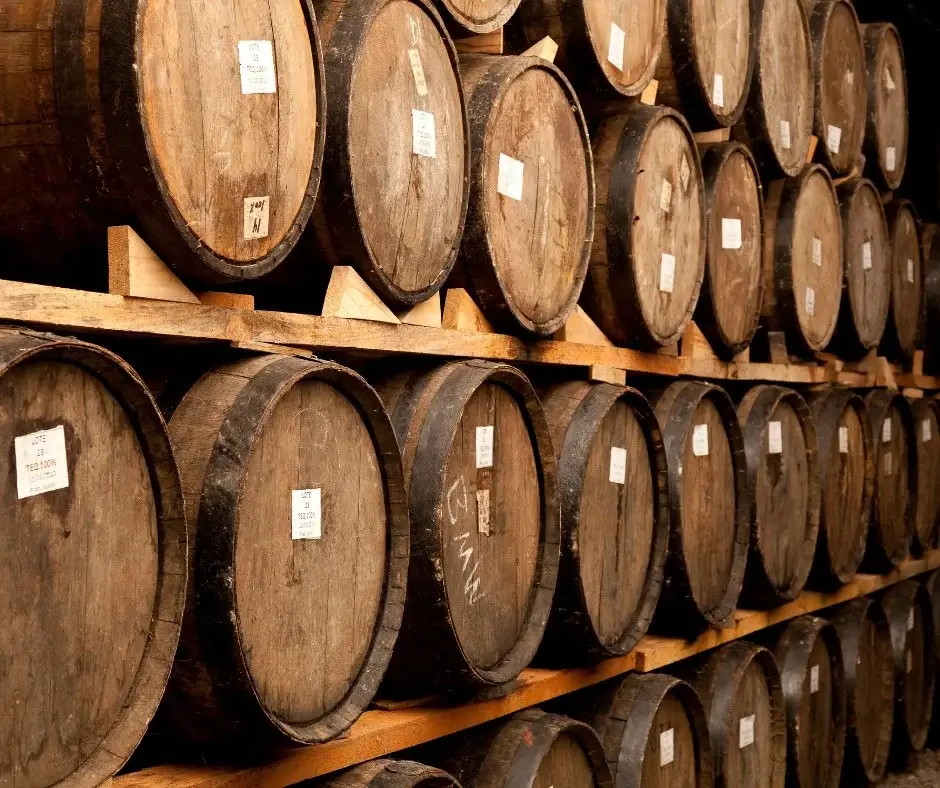
Whisky develops depth during maturation. The fresh distillate is placed into oak barrels, which act as a filter, a catalyst, and a source of flavor. The wood releases tannins, vanillin, lignin, and other aromatic compounds that slowly integrate with the alcohol. This is where notes of vanilla, caramel, dried fruit, and warm spices originate.
Whisky also “breathes” in the barrel. Temperature shifts cause the wood to expand and contract, allowing the liquid to move into the wood and back out again. This slow cycle shapes complexity and gives whisky its natural color. Time in the barrel matters not just as a number, but as an active exchange between wood, air, and spirit.
Alcohol as a Flavor Carrier — But Not the Only One
Alcohol functions as a solvent for aroma molecules and intensifies the perception of aroma thanks to its volatility. It also creates warmth and the familiar “burn” on the palate. However, these sensory effects can be created in other ways — through controlled bitterness, spice, herbs, tannins, and the texture of the drink.
This means that the character of whisky can be reconstructed even without alcohol, provided we understand how its sensory components work together. Alcohol does not create flavor — it helps deliver it.
How Does Scotch Whisky Taste — and Why Is It Still the Benchmark?
Scotch whisky is typically made from malted barley, fermented for depth, and aged in oak barrels — often previously used for sherry or bourbon. Its flavor is usually balanced, layered, and grounded in malty, grain-derived notes with subtle nutty undertones.
In regions such as Islay, the addition of peat smoke during barley drying creates a distinctive smoky character — one of the most iconic signatures of Scotch whisky.
Despite strong competition from:
smoother Irish whiskey (due to triple distillation),
and precise, refined Japanese whisky,
Scotch remains the global reference point. This comes from its continuity of tradition, mastery of craft, and the fact that Scotch defined the very idea of what whisky is supposed to be.
What Changes in the Taste of Whisky When You Remove the Alcohol?
When we talk about alcohol-free whisky, it’s important to be clear: alcohol plays a specific role in the taste experience. It provides warmth, helps carry aroma, and shapes intensity. Removing it changes the way flavor is perceived. But this change does not have to mean losing quality — the key lies in what is built in its place. For a non-alcoholic whisky to feel “whisky-like”, it must not only replicate aroma, but also structure, depth, and the progression of flavors as the drink evolves in the mouth.
Less Heat — but Not Necessarily Less Character
The burning warmth in whisky comes from its alcohol content — typically 40% or higher. This sensation is fast, sharp, and warming. In alcohol-free versions, that effect is naturally absent, simply because there is no ethanol.
However, the “heat” in whisky is not the only source of intensity. Warmth and expressiveness can be recreated using carefully calibrated ingredients such as:
ginger,
Szechuan pepper,
controlled heat from chili,
mustard seed root.
Bitterness and light tannins can replace the sense of dryness and the lingering finish that whisky is known for.
The key is balance. If the spice is too aggressive, the drink tastes like pepper-infused water rather than whisky. Controlled heat should support the flavor, not overwhelm it.
How Aroma Perception Changes at 0%
Alcohol is volatile — it helps lift aroma upward in the glass. Without alcohol, the nose often feels shorter or flatter. To compensate, alcohol-free whisky relies on:
increasing the concentration of natural aroma compounds,
layering aromatics so they unfold gradually,
using ingredients that enhance aroma diffusion without ethanol.
Texture is also far more important in 0% spirits. If the liquid is too thin, aromas have nothing to “hold onto.” This is why small amounts of plant glycerin are often used to add roundness and mouthfeel — not sweetness.
The “Empty Middle” Problem in Most Zero-Proof Whisky Alternatives
The most common issue in alcohol-free whisky substitutes is the empty mid-palate — where aroma is noticeable at first, but quickly fades, leaving no development and no finish. The drink ends up tasting like something that had flavor and then lost it.
This happens because many products focus only on the initial aroma, not on structure. But it is the middle and the finish that give whisky its depth and dimension. To avoid the empty center, the flavor must be intentionally built in three stages:
Front – opening aroma and first impression
Mid-palate – texture and evolving flavor notes
Finish – a lasting conclusion with direction, not just a fade
This requires layering plant extracts, bitter components, controlled spice, and the right level of mineral presence and density.
This stage ultimately determines whether a non-alcoholic whisky tastes like a mature, structured spirit — or like flavored water.
How to Recreate the Taste of Whisky Without Alcohol
To recreate the character of whisky in a non-alcoholic drink, it’s not enough to simply add “smoke flavor” or a “malt essence.” The taste of whisky is defined by structure, depth, and the sequence of sensory impressions. In a 0% version, the key is to build the same sensory layers using different tools: plant extraction, controlled heat, tannins, bitterness, and the texture of the liquid. The process is not about mimicking one element — it’s about reconstructing the way whisky behaves in the mouth.
Layering Aromas and Extracting Flavor
Whisky has a complex aroma that unfolds gradually. That’s why non-alcoholic whisky relies on aroma layering — combining several extracts, each perceived at a different time and in a different direction.
Opening notes: light malt, grain, or subtle fruit.
Core notes: oak extracts, nutty tones, oolong tea, cocoa, citrus peel, warm spices.
Finish notes: bitter, mineral, gently smoky, or herbal accents.
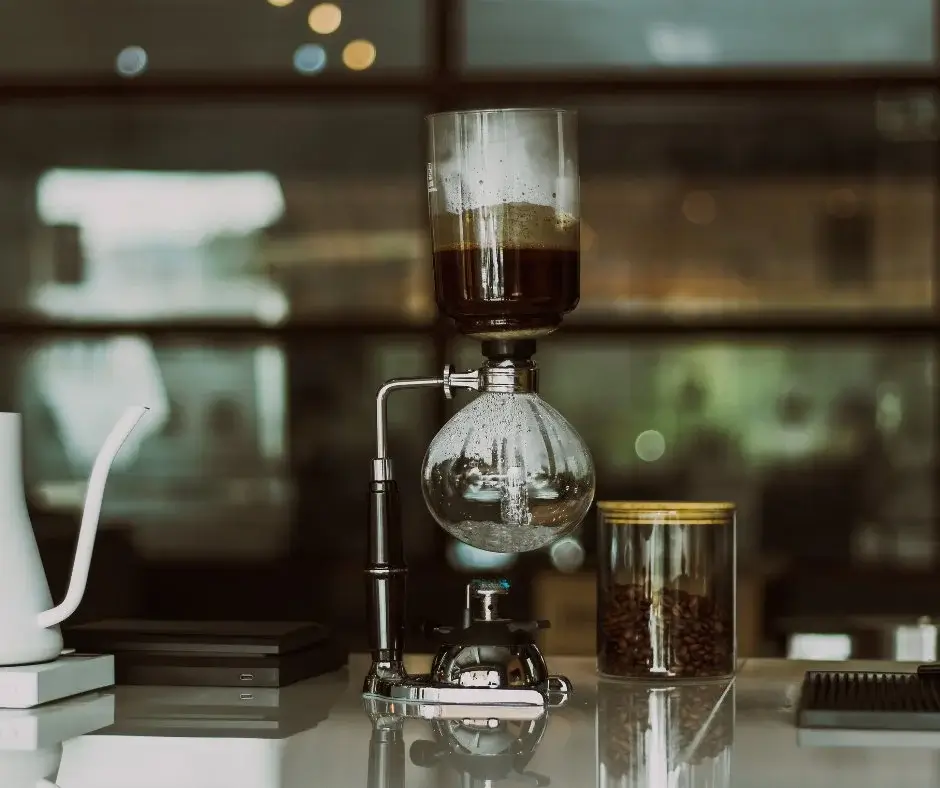
Extraction is where the real flavor chemistry begins. Some ingredients require long, temperature-controlled steeping, where every degree and every minute matter. Others would turn dull or bitter when heated, so they are extracted cold in short macerations — just until the profile stabilizes.
There is no single recipe. It is a continuous balancing act between time, temperature, intensity, and surface contact. Every small adjustment shifts the drink’s character.
This is why whisky — including alcohol-free whisky — does not have one “main flavor.”
Its profile is a composition of micro-aromas arranged in sequence. If one layer is too strong, the drink loses elegance. If too weak, it becomes flat.
A good blend is like an orchestra: nothing plays solo — but remove one voice, and the harmony collapses.
What Replaces the Heat? Spice, Bitterness, Herbs
The warming sensation in whisky comes from alcohol, but it can be recreated without trying to imitate ethanol.
Spice (warmth): ginger, controlled habanero, Szechuan pepper — warmth that grows gradually, not aggressively.
Bitterness (structure): gentian root, citrus peel, winter spices — tension on the mid-palate.
Tannins & herbs (finish): red teas, oolong, oak bark — dryness and length.
The goal is controlled intensity, not spice for spice’s sake. Non-alcoholic whisky should build and resolve slowly, not spike and disappear.
Glycerin and Other Structure-Building Components — Why They Matter
Alcohol gives whisky its body and viscosity. Without it, even a well-aromatized drink can feel thin.
That’s why structure-building ingredients are used — not to change flavor, but to influence mouthfeel.
Plant glycerin (in low concentration): adds smoothness and round transitions.
Light tannins: from tea or wood, adding grip and dryness.
Natural acids: sharpening flavor contours.
Minerality: adding depth and dimension.
The goal is a drink that feels like whisky: layered, full, with a clear beginning, middle, and finish.
How We Work With This at Volante (Without the Marketing Language)
Recreating whisky’s character without alcohol requires control, precision, and time. It is not based on a single ingredient or a “whisky flavoring.” It is the result of multiple raw materials interacting — and the parameters that guide those interactions: duration, temperature, order, ratio. For us, this is craft, not imitation.
Infusions, Roots, Spices — and Patience
Everything begins with extraction. Each ingredient has its own pace:
Some require slow, stable extraction to release malty, earthy, cereal tones.
Others must be extracted cold and briefly to avoid bitterness or harshness.
Patience here is a technical necessity, not a romantic gesture. A shift of a few degrees or minutes can flatten the flavor or make it aggressive.
Therefore, the foundation is repeatability and precision — not instinctive “seasoning.”
Filtration and Balance — The Most Difficult Stage
When the extracts are ready, the real work begins: composition and stabilization. Filtration must remove what is unnecessary — sediments, harsh fractions, haze-forming compounds — but without stripping texture.
Too much filtration → the drink loses body.
Too little → it loses clarity and refinement.
Balance is iterative: adjust, taste, adjust, taste. Developing a repeatable, full, stable profile takes more time than extraction itself.
What “Character” Means in Non-Alcoholic Whisky According to Volante
Character does not mean copying whisky 1:1. It means three sensory principles:
Layered aroma — opening, mid-palate, finish, not all at once.
Mouthfeel — not thin; rounded, with tension.
Finish — something that remains, not just disappears.
Character is not just “tastes like whisky.” Character is how whisky unfolds while you drink it. That is what we aim to recreate.
Taste Is Not About ABV — It’s About Experience
Whisky is associated with a certain way of drinking — slow, intentional, and focused on discovery. It’s not a drink you reach for to “quench thirst,” nor something consumed by accident. And this ritual matters just as much in the non-alcoholic version. The taste of whisky is not only aroma and texture — it’s also time, setting, glassware, and the mindset in which we drink it.
Whisky Is a Ritual — Glass, Time, Aroma, Moment
Whisky tastes best when you allow it to open up. That means:
choosing the right glass (a heavy tumbler or tulip shape works best),
giving the aromas a moment to rise and interact with the air,
drinking slowly, with pauses between sips.
This is how the aroma unfolds gradually, and how the mouthfeel becomes more pronounced. Even alcohol-free whisky follows the same principle — because the experience doesn’t come from the alcohol, but from how you drink it.
How to Drink Non-Alcoholic Whisky So It Makes Sense
The biggest mistake is treating 0% whisky as something meant to be taken “as a shot.” This is not a drink that works through impact — it works through evolution over time.
So it’s best to:
sip it slowly, allowing the aroma to open,
serve at room temperature or with one large slow-melting ice cube,
treat it as part of a conversation, dinner, or a quiet moment — not as a “functional” drink.
It’s also worth saying clearly: Alcohol-free whisky often shows its full character in cocktails. Pairing it with well-chosen mixers — such as tonic, kombucha, non-alcoholic bitters, ginger ale, cold brew, or herbal infusions — helps reveal complexity and layered flavor progression that may be more subtle when sipped neat.
This is where you truly see that flavor is composition, not alcohol content. Without alcohol, it’s even easier to notice:
gentle warmth,
herbal undertones,
wood notes,
soft bitterness,
and a longer, cleaner finish.
This is not a substitute “for the party.”
It’s a choice for those who enjoy flavor — not the effect.
Who It’s For — and Who It Isn’t (And That’s Okay)
Non-alcoholic whisky isn’t meant for everyone. If someone is looking for the sharp heat and strong alcoholic finish — they won’t find it here.
But if someone wants:
a mindful alternative that allows them to enjoy the flavor and the evening without the side effects,
a drink to be enjoyed rather than endured,
a way to celebrate without overloading the body,
then alcohol-free spirits are made exactly for them.
It’s not about giving something up. It’s about choosing differently.